If you find yourself reaching up to rub your neck the moment you walk through the door after work, you are far from alone. That dull ache, the stiffness that makes it hard to turn your head, the tension that seems to live just below your skull — these are some of the most common complaints we hear at Optimal Chiropractic in West Fargo, ND. It is easy to brush it off as “just stress” or assume it will go away on its own. But when neck discomfort becomes a daily ritual, your body is sending you a clear signal that something deeper is going on.
What does it mean when your neck hurts after work every day?
Daily neck pain and tension after work is often a sign of cumulative stress on the cervical spine — the seven vertebrae that make up your neck. This can stem from prolonged poor posture, repetitive movements, muscle imbalances, or joint restrictions that build up over time. It is rarely just tiredness. Your neck is telling you it needs attention.
- Why Your Neck Hurts More Than You Realize
- The Real Causes of Neck Pain After Work
- Signs Your Neck Pain Is More Than Muscle Tension
- How Chiropractic Care Fits Into the Picture
- Practical Tips You Can Start Using Today
- When to See a Chiropractor About Neck Pain
- Neck Pain Triggers vs. Corrective Strategies
- Myths vs. Facts About Neck Pain
- Final Thoughts from Optimal Chiropractic
Why Your Neck Hurts More Than You Realize
The cervical spine is one of the most mobile and vulnerable parts of your entire body. It supports the weight of your head — which averages around ten to twelve pounds — while allowing you to look left, right, up, and down throughout the day. That is an incredible amount of mechanical demand, especially when you factor in hours of sitting at a desk, staring at a screen, or hunching over a phone.
Here in West Fargo, many of our patients work desk jobs, drive long commutes, or spend extended hours in positions that place the neck under persistent strain. What makes this particularly sneaky is that the discomfort does not always show up during the activity itself. It accumulates. By the end of the workday, the muscles, joints, and discs of your cervical spine have absorbed hours of compressive force, and the result is that familiar ache you are rubbing on your way to the couch.
The neck also houses a dense network of nerves that branch out from the spinal cord and travel into the shoulders, arms, and hands. When the joints of the cervical spine are not moving the way they should — a condition known in chiropractic care as a subluxation or joint restriction — those nerves can be irritated. That irritation does not always feel like sharp pain. Sometimes it shows up as tightness, fatigue, headaches, or even a general sense of fog and tension.
The Real Causes of Neck Pain After Work
Understanding the root cause of your neck pain is the first step toward doing something about it. Most people assume it is purely muscular, but the reality is usually more layered than that.
Forward Head Posture is one of the leading contributors to end-of-day neck pain. For every inch your head drifts forward from its neutral position over your spine, the effective load on the cervical spine increases significantly. If you are leaning toward your monitor or cradling your phone between your shoulder and ear, you are multiplying the mechanical stress your neck absorbs every hour.
Prolonged Static Postures are another major factor. Your body is designed to move. When you hold any position — even a relatively good one — for hours at a time, muscles fatigue, circulation decreases, and joints stiffen. Office work, driving, and even standing at a counter can all trigger this if variety and movement are not built into the day.
Cervical Joint Restrictions develop when the small joints between your vertebrae lose their normal range of motion. This can happen gradually due to posture habits, old injuries, or repetitive motion. When these joints are not gliding the way they should, the surrounding muscles work overtime to compensate, leading to the chronic tension so many of our patients describe.
Muscle Imbalances between the deep stabilizing muscles of the neck and the larger superficial muscles are extremely common in people who sit for a living. When the deep stabilizers are weak or underactive, the bigger muscles take on more load than they are designed to handle, and they let you know about it by the time 5 PM rolls around.
Signs Your Neck Pain Is More Than Muscle Tension
Not all neck discomfort is created equal, and it is worth knowing the difference between ordinary post-work tension and something that deserves a closer look. General muscle tightness that eases with rest and gentle movement is common and usually responsive to conservative care. But certain patterns deserve prompt attention.
If your neck pain is accompanied by numbness, tingling, or weakness that travels down one or both arms, this can suggest nerve involvement — sometimes from a disc that is placing pressure on a nerve root. Persistent headaches that start at the base of the skull and travel toward the forehead, a condition sometimes called cervicogenic headache, are another sign that the cervical spine may be contributing to your symptoms beyond simple muscle tension.
Dizziness or a feeling of imbalance when you move your head, difficulty finding a comfortable sleeping position, or pain that does not improve after a few days of rest can all indicate that something more than general fatigue is at play. At Optimal Chiropractic in West Fargo, both Dr. Andrew Jahner and Dr. Nicholas Barney are experienced in identifying these patterns and helping patients understand what is actually happening in their spine.
How Chiropractic Care Fits Into the Picture
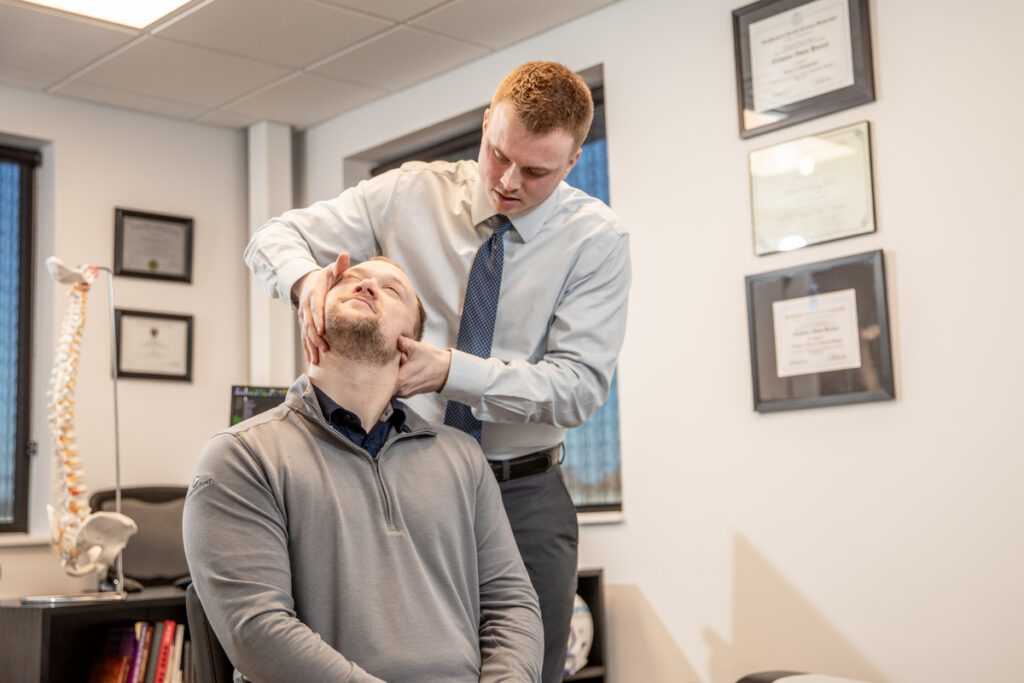
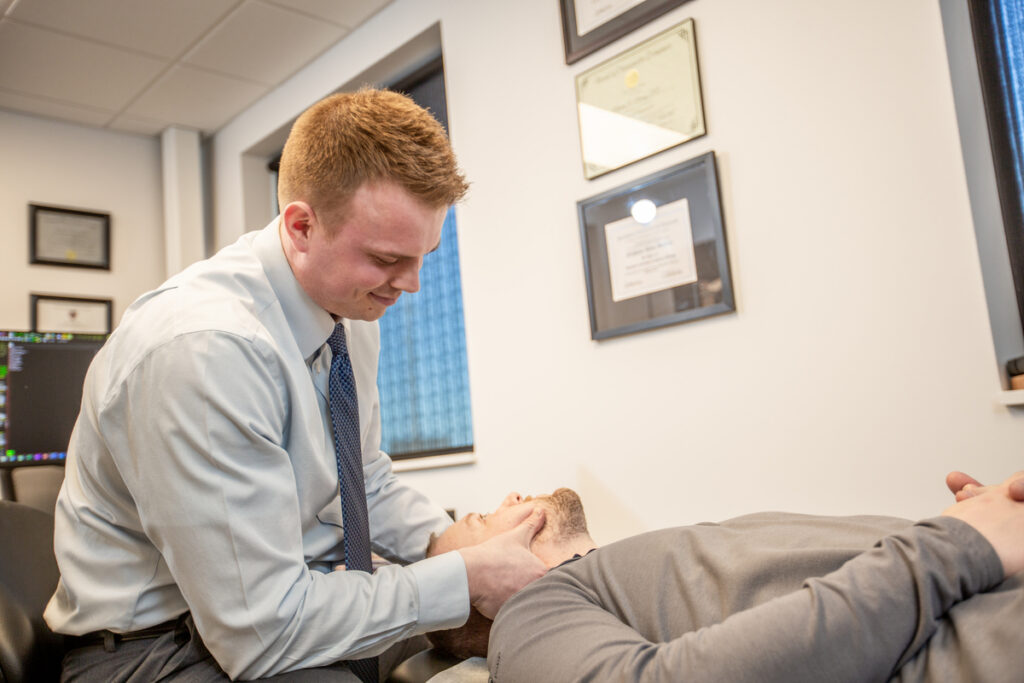
Chiropractic care offers a non-invasive, drug-free approach to addressing the underlying mechanical causes of neck pain. Rather than simply managing symptoms, the goal is to restore proper joint motion, reduce nerve irritation, and support the body’s natural ability to function well.
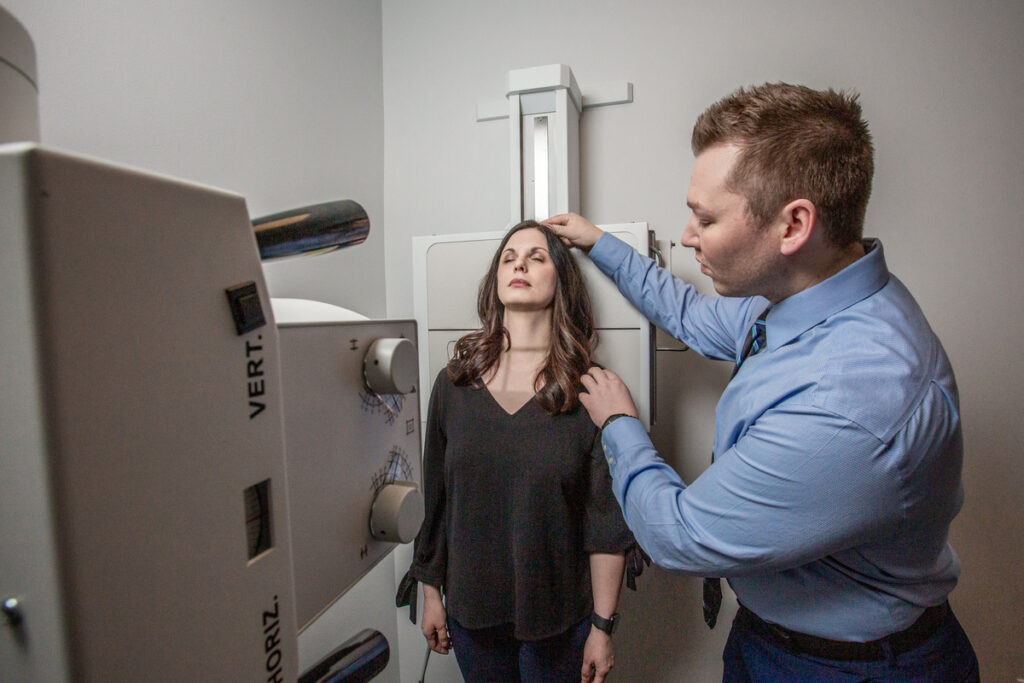
At Optimal Chiropractic, Dr. Andrew Jahner and Dr. Nicholas Barney take a thorough approach to evaluating each patient. This means looking at how the entire spine moves, not just the area that hurts. A restriction in the upper back, for example, can force the neck to compensate in ways that lead to pain and stiffness — even if the neck itself appears to be the only problem.
Chiropractic adjustments to the cervical spine are a well-established conservative care approach. Evidence from organizations like the American College of Physicians and research published in peer-reviewed journals suggests that spinal manipulation can be effective in helping patients with neck pain, particularly when combined with exercise and lifestyle guidance. The care at Optimal Chiropractic is always tailored to the individual — what works for one patient may look different for another, which is exactly why a proper evaluation matters.
Beyond adjustments, the care team at Optimal Chiropractic in West Fargo may incorporate soft tissue work, corrective exercises, ergonomic guidance, and postural retraining — all aimed at getting to the root of why your neck keeps hurting at the end of every workday.
Practical Tips You Can Start Using Today
While professional evaluation is always the most important step, there are meaningful changes you can make right now to reduce the daily strain on your neck. These are not quick fixes, but consistent habits that support long-term relief.
Position your monitor so the top of the screen is at or just below eye level. This single adjustment encourages a more neutral head position and can dramatically reduce the forward head drift that accumulates over the course of a workday. If you use a laptop primarily, consider a separate keyboard and monitor stand — working from a laptop on a flat surface is one of the most common ergonomic mistakes we see in West Fargo patients.
Set a movement reminder every thirty to forty-five minutes. Stand up, walk around briefly, and perform a few gentle neck movements — slow chin tucks, shoulder rolls, and side-to-side head turns. These micro-breaks interrupt the static loading on your cervical spine and keep blood flow moving to the muscles and discs.
Pay attention to how you hold your phone. Cradling it against your shoulder, or tilting your head down to look at the screen for extended periods, are two of the most common drivers of modern neck pain. Hold your phone at eye level when possible, and consider using hands-free options for longer calls.
Sleep position also matters more than most people realize. Sleeping on your stomach forces your head into a rotated position for hours at a time, placing significant rotational stress on your cervical spine. Side or back sleeping with a supportive pillow that keeps your neck in a neutral position is generally a much better option.
When to See a Chiropractor About Neck Pain
If your neck pain has become a daily experience — one you almost expect by the time work is over — that pattern alone is worth addressing with a professional. You do not need to be in severe pain to benefit from chiropractic evaluation. In fact, early intervention is almost always more effective than waiting until symptoms become debilitating.
Seek care sooner if your neck pain has lasted more than one to two weeks without meaningful improvement, if it is affecting your sleep or concentration, or if it is accompanied by arm pain, tingling, or numbness. Dr. Andrew Jahner and Dr. Nicholas Barney at Optimal Chiropractic in West Fargo, ND are well-versed in these presentations and can help determine the appropriate course of care.
There are also red flags that may indicate a need for urgent medical evaluation rather than chiropractic care first. These include neck pain following a significant trauma, severe headache that comes on suddenly, fever paired with neck stiffness, or any neurological symptoms that are rapidly worsening. In these cases, an emergency evaluation is the right first step, and any responsible chiropractor will tell you the same.
Neck Pain Triggers vs. Corrective Strategies
| Common Trigger | What It Does to Your Neck | Corrective Strategy |
|---|---|---|
| Forward head posture at a desk | Multiplies compressive load on cervical spine | Raise monitor to eye level; practice chin tucks |
| Phone use with head tilted down | Increases load on neck muscles and joints | Hold phone at eye level; limit prolonged use |
| Sitting in one position for hours | Muscle fatigue, joint stiffness, reduced circulation | Movement breaks every 30-45 minutes |
| Stomach sleeping | Sustained cervical rotation for hours | Switch to side or back sleeping with neutral pillow |
| Shoulder cradling a phone | Lateral flexion and muscle overload | Use speakerphone or headset for calls |
| Stress and tension habits | Chronic muscle guarding and restricted movement | Breathing exercises, regular movement, chiropractic care |
Myths vs. Facts About Neck Pain
Myth: Neck pain after work is just stress and there is nothing you can do about it.
Fact: While stress absolutely contributes to muscle tension, daily neck pain typically has identifiable mechanical causes — posture habits, joint restrictions, muscle imbalances — that respond well to targeted care. Calling it “just stress” can delay the help your body actually needs.
Myth: Cracking or popping in the neck means something is seriously wrong.
Fact: Audible sounds from the neck joints are usually the result of gas releasing from the joint space, a harmless process. That said, if cracking is accompanied by pain, locking, or neurological symptoms, it is worth having evaluated. Sound alone is not cause for alarm.
Myth: Resting and avoiding movement is the best approach for neck pain.
Fact: Prolonged rest and avoiding movement can actually worsen stiffness and slow recovery. Gentle, guided movement is generally recommended as part of conservative care. The key is movement that is appropriate for your specific condition — not pushing through sharp or radiating pain.
Myth: Chiropractic adjustments to the neck are dangerous.
Fact: Chiropractic cervical care has been extensively studied and is widely recognized as a safe, conservative treatment option when performed by a licensed, qualified chiropractor. Serious adverse events are extremely rare. Organizations like the National Center for Complementary and Integrative Health acknowledge chiropractic care as a reasonable option for neck pain.
Myth: If imaging does not show anything, your neck pain is not real.
Fact: Many significant causes of neck pain — muscle imbalances, joint restrictions, early disc changes, postural dysfunction — do not always show up clearly on standard X-rays or MRIs. A clinical evaluation that assesses movement, strength, and neurological function is just as important as imaging, and often more informative.
Final Thoughts from Optimal Chiropractic
Neck pain at the end of the workday should not be something you simply accept as part of life. It is your body communicating that something in the way you are moving — or not moving — needs to change. The good news is that the underlying causes are almost always addressable, and most people respond well to conservative, individualized care.
Here at Optimal Chiropractic in West Fargo, ND, Dr. Andrew Jahner and Dr. Nicholas Barney genuinely care about helping the people of this community feel better and move better. Whether you have been dealing with neck tension for weeks or years, an honest evaluation is always the best starting point. You deserve to come home from work and actually feel good — not spend your evening rubbing out the tension that built up since morning.
If neck pain has become a familiar part of your daily routine, we encourage you to take the next step. The team at Optimal Chiropractic in West Fargo is here to listen, evaluate, and create a plan that makes sense for you and your life.
Frequently Asked Questions
Why does my neck hurt specifically at the end of the workday?
End-of-day neck pain is typically the result of cumulative strain that builds up over hours of static posture, repetitive movements, or sustained tension. The muscles, joints, and discs of your cervical spine absorb stress throughout the day, and by the time you finish work, that load has reached the point where your body signals discomfort. It is a pattern worth addressing with a professional evaluation.
Can a chiropractor actually help with chronic neck stiffness?
Evidence suggests that chiropractic care can be effective for both acute and chronic neck pain, particularly when the underlying cause involves joint restriction or postural dysfunction. Dr. Andrew Jahner and Dr. Nicholas Barney at Optimal Chiropractic use a thorough evaluation process to identify what is specifically driving your symptoms before recommending any course of care.
How long does it typically take to see improvement with chiropractic care for neck pain?
This depends on the nature and duration of the problem. Some patients notice meaningful improvement within a few visits, while others with longer-standing issues may require a more extended course of care. A realistic timeline is something Dr. Andrew Jahner or Dr. Nicholas Barney can discuss with you after a proper examination.
Is it safe to get my neck adjusted?
Chiropractic cervical adjustments, when performed by a licensed chiropractor, are widely considered safe and appropriate for most patients with neck pain. Your chiropractor will always conduct a thorough health history and evaluation to determine whether adjustments are appropriate for your individual situation.
What is the difference between a neck adjustment and massage for neck pain?
Massage primarily addresses muscle tension and soft tissue tightness, while a chiropractic adjustment targets the joints of the spine to restore proper movement and reduce nerve irritation. Both can be valuable, and they are often complementary. The right approach depends on the root cause of your specific neck pain.
Should I see a chiropractor or a medical doctor first for neck pain?
For most cases of non-traumatic neck pain — especially the kind that builds up over a workday — a chiropractor is a well-qualified first point of contact. If your symptoms include severe neurological changes, recent significant injury, or signs of infection, a medical doctor should be seen first. Optimal Chiropractic in West Fargo will always refer out when a situation falls outside the appropriate scope of chiropractic care.
TL;DR Summary
- Daily neck pain after work is not just stress — it usually has identifiable mechanical causes like forward head posture, joint restrictions, and muscle imbalances that accumulate over the workday.
- Common contributors include screen posture, prolonged sitting, phone habits, and stomach sleeping — all of which place sustained stress on the cervical spine.
- Warning signs like arm tingling, persistent headaches, or dizziness suggest nerve involvement and warrant prompt professional evaluation.
- Chiropractic care from Dr. Andrew Jahner and Dr. Nicholas Barney at Optimal Chiropractic in West Fargo, ND offers a non-invasive, individualized approach to finding and addressing the root cause of your neck pain.
- Simple ergonomic changes and movement habits can meaningfully reduce daily strain — but a professional evaluation is the most important first step if neck pain has become a regular part of your routine.